Jesus Christ

Prayers to Our Lord , Jesus Christ

Ejaculations and Invocations Lord Jesus, Let Me Know Myself
We Adore Thee Commemoration of the Sacred Heart of Jesus
Lord, Jesus Daily Offering to the Sacred Heart of Jesus
Aufer a me cor lapideum (Take From Me My Heart of Stone)

O Divine Heart of Jesus
Domine Iesu, noverim me (Lord Jesus, Let me Know Myself)

O Indescribable Beauty of God Most High
Most Sweet Jesus, Redeemer O Father of Mercies
Prayer of St. Genesius O Most Sacred Heart of Jesus
Tu es, Deus, omnia nostra (Thou Art, O God, Our All)

Act of Reparation
Iesu Infans Dulcissime (Jesus, Sweetest Child)

Commemoration of the Most Precious Blood
Commemoration of the Cross Lord Jesus Christ
By the Sign of the Cross Commemoration of the Most Holy Name of Jesus
O God, Who for Our Sake O Good Jesus
O God, Who Didst Will Bestow upon us
Hail, Holy Cross, Our Strength Psalter of Jesus
Prayer Before a Crucifix Seven Prayers of St. Gregory on the Passion of the Lord
O Good Cross O God, Who by the Passion of Thine Only-begotten Son
Save Me, O Holy Cross We Offer Thee, Lord Jesus

The Consecration Of Oneself To Jesus Christ,

Incarnate Wisdom, By The Hands Of Mary
The Golden Arrow

Prayer to the Holy Face
The Holy Face Prayer

Novena to the Holy Face

Act of Consecration to the Sacred Heart
An Act of Spiritual Communion

The Anima Christi

Skip to content
Toggle navigation
Catholic Online Logo
We ask you, humbly, to help.
Deacon Keith FournierHi readers, it seems you use Catholic Online a lot; that’s great! It’s a little awkward to ask, but we need your help. If you have already donated, we sincerely thank you. We’re not salespeople, but we depend on donations averaging $14.76 and fewer than 1% of readers give. If you donate just $5.00, the price of your coffee, Catholic Online School could keep thriving. Thank you. Help Now >
Life of Jesus Christ
Free World Class Education
Learn More
Jesus Christ: True or False
Jesus was Buried
Life of Jesus Christ
Meaning of the Name
Origin of the Name
Presence of Jesus in the Eucharist
What we believe about Jesus
I. ABSOLUTE CHRONOLOGY
The incidents whose absolute chronology may be determined with more or less probability are the year of Christ’s nativity, of the beginning of His public life, and of His death. As we cannot fully examine the data entering into these several problems, the reader ought to compare what has been said on these points in the article BIBLICAL CHRONOLOGY.

A. The Nativity
St. Matthew (2:1) tells us that Jesus was born “in the days of King Herod”. Josephus (Ant., XVII, viii, 1) informs us that Herod died after ruling thirty four years de facto, thirty seven years de jure. Now Herod was made rightful king of Judea A.U.C. 714, while he began his actual rule after taking Jerusalem A.U.C. 717. As the Jews reckoned their years from Nisan to Nisan, and counted fractional parts as an entire year, the above data will place the death of Herod in A.U.C. 749, 750, 751. Again, Josephus tells us from that an eclipse of the moon occurred not long before Herod’s death; such an eclipse occurred from 12 to 13 March, A.U.C. 750, so that Herod must have died before the Passover of that year which fell on 12 April (Josephus, “Ant”., iv, 4; viii, 4). As Herod killed the children up to two years old, in order to destroy the new born King of the Jews, we are led to believe that Jesus may have been born A.U.C. 747, 748, 749. The enrollment under Cyrinus mentioned by St. Luke in connection with the nativity of Jesus Christ, and the remarkable astronomical conjunction of Mars, Jupiter, and Saturn in Pisces, in the spring of A.U.C. 748, will not lead us to any more definite result.

We ask you, humbly, to help.
Deacon Keith FournierHi readers, it seems you use Catholic Online a lot; that’s great! It’s a little awkward to ask, but we need your help. If you have already donated, we sincerely thank you. We’re not salespeople, but we depend on donations averaging $14.76 and fewer than 1% of readers give. If you donate just $5.00, the price of your coffee, Catholic Online School could keep thriving. Thank you. Help Now >
B. Beginning of the Public Ministry
The date of the beginning of Christ’s ministry may be calculated from three different data found respectively in Luke 3:23; Josephus, “Bel. Jud.” I, xxi, 1; or “Ant.”, XV, ii, 1; and Luke 3:1. The first of these passages reads: “And Jesus himself was beginning about the age of thirty years”. The phrase “was beginning” does not qualify the following expression “about the age of thirty years”, but rather indicates the commencement of the public life. As we have found that the birth of Jesus falls within the period 747-749 A.U.C., His public life must begin about 777-779 A.U.C. Second, when, shortly before the first Pasch of His public life, Jesus had cast the buyers and sellers out of the Temple, the Jews said: “Six and forty years was this temple in building” (John 2:20). Now, according to the testimony of Josephus (loc. cit.), the building of the Temple began in the fifteenth year of Herod’s actual reign or in the eighteenth of his reign de jure, i.e. 732 A.U.C.; hence, adding the forty six years of actual building, the Pasch of Christ’s first year of public life must have fallen in 778 A.U.C. Third, the Gospel of St. Luke (3:1) assigns the beginning of St. John the Baptist’s mission to the “fifteenth year of the Tiberius Caesar”. Augustus, the predecessor of Tiberius, died 19 August, 767 A.U.C., so that the fifteenth year of Tiberius’s independent reign is 782 A.U.C.; but then Tiberius began to be associate of Augustus in A .U.C. 764, so that the fifteenth year reckoned from this date falls in A.U.C. 778. Jesus Christ’s public life began a few months later, i.e. about A.U.C. 779.

C. The Year of the Death of Christ
According to the Evangelists, Jesus suffered under the high priest Caiphas (A.U.C. 772-90, or A.D. 18-36), during the governorship of Pontius Pilate A.U.C. 780-90). But this leaves the time rather indefinite. Tradition, the patristic testimonies for which have been collected by Patrizi (De Evangeliis), places the death of Jesus in the fifteenth (or sixteenth) year of Tiberius, in the consulship of the Gemini, forty-two years before the destruction of Jerusalem, and twelve years before the preaching of the Gospel to the Gentiles. We have already seen that the fifteenth year of Tiberius is either 778 or 782, according to its computation from the beginning of Tiberius’s associate or sole reign; the consulship of the Gemini (Fufius and Rubellius) fell in A.U.C. 782; the forty second year before the destruction of Jerusalem is A.D. 29, or A.U.C. 782, twelve years before the preaching of the Gospel to the Gentiles brings us to the same year, A.D. 29 or A.U.C. 782, since the conversion of Cornelius, which marks the opening of the Gentile missions, fell probably in A.D. 40 or 41.

Confirmation with Certificate of Completion – Enroll FREE Now
D. The Day of the Death of Christ
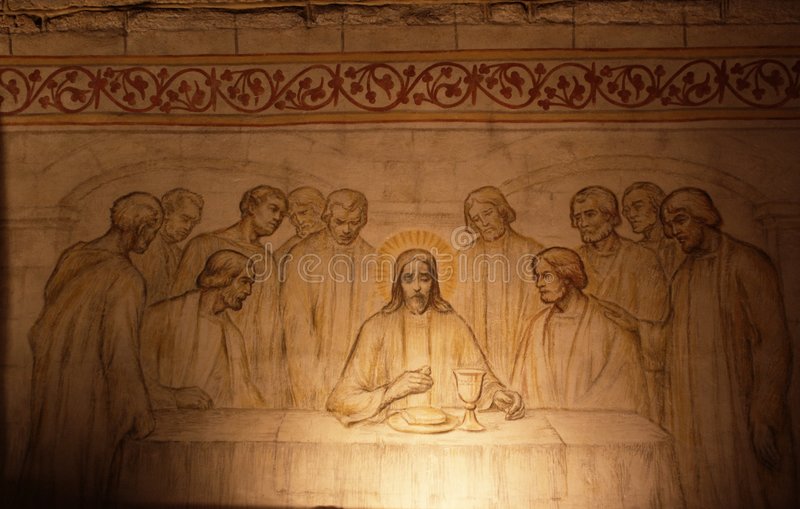
Jesus died on Friday, the fifteenth day of Nisan. That He died on Friday is clearly stated by Mark (xv, 42), Luke (xxiii, 54), and John (xix, 31). The few writers who assign another day for Christ’s death are practically lost in the multitude of authorities who place it on Friday. What is more, they do not even agree among themselves: Epiphanius, e.g., places the Crucifixion on Tuesday; Lactantius, on Saturday; Westcott, on Thursday; Cassiodorus and Gregory of Tours, not on Friday. The first three Evangelists are equally clear about the date of the Crucifixion. They place the Last Supper on the fourteenth day of Nisan, as may be seen from Matt., xxvi, 17, 20; Mark, xiv, 12 17; Luke, xxii, 7 14. Nor can there be any doubt about St. John’s agreement with the Synoptic Evangelists on the question of the Last Supper and the Crucifixion. The supper was held “before the festival day of the Pasch” (John, xiii, 1), i. e. on 14 Nisan, as may be seen from Matt., xxii, 7-14. Nor can there be any doubt about St. John’s agreement with the Synoptic Evangelists on the question of the Last Supper and the Crucifixion. The Supper was held “before the festival day of the pasch” (John, xiii, 1), i.e. on 14 Nisan, since the sacrificial day was computed according to the Roman method (Jovino, 123 sqq., 139 sqq.). Again, some disciples thought that Judas left the supper table because Jesus had said to him: “Buy those things which we have need of for the festival day: or that he should give something to the poor” (John, xiii, 29). If the Supper had been held on 13 Nisan this belief of the disciples can hardly be understood, since Judas might have made his purchases and distributed his alms on 14 Nisan; there would have been no need for his rushing into the city in the middle of the night. On the day of Christ’s Crucifixion the Jews “went not into the hall, that they might not be defiled, but that they might eat the pasch” (John, xviii, 28). The pasch which the Jews wished to eat could not have been the paschal lamb, which was eaten on 14 Nisan, for the pollution contracted by entering the hall would have ceased at sundown, so that it would not have prevented them from sharing in the paschal supper. The pasch which the Jews had in view must have been the sacrificial offerings (Chagighah), which were called also pasch and were eaten on 15 Nisan. Hence this passage places the death of Jesus Christ on the fifteenth day of Nisan. Again, Jesus is said to have suffered and died on the “parasceve of the pasch”, or simply on the “parasceve” (John, xix, 14, 31); as “parasceve” meant Friday, the expression “parasceve” denotes Friday on which the pasch happened to fall, not the before the pasch. Finally, the day following the parasceve on which Jesus died is called “a great sabbath day” (John, xix, 31), either to denote its occurrence in the paschal week or to distinguish it from the preceding pasch, or day of minor rest.

FREE Catholic Classes Pick a class, you can learn anything
Image of St. Brigid of Ireland
St. Brigid of Ireland
Image of Third Grade Catechism FREE Online Classes
Third Grade Catechism FREE Online Classes
Image of Second Grade Catechism FREE Online Classes
Second Grade Catechism FREE Online Classes
Image of Advent Wreath Prayer
Advent Wreath Prayer
II. RELATIVE CHRONOLOGY
No student of the life of Jesus will question the chronological order of its principal divisions: infancy, hidden life, public life, passion, glory. But the order of events in the single divisions is not always clear beyond dispute.

A. The Infancy of Jesus
The history of the infancy, for instance, is recorded only in the First Gospel and in the Third. Each Evangelist contents himself with five pictures:

St. Matthew describes the birth of Jesus, the adoration of the Magi, the flight into Egypt, the slaughter of the Holy Innocents, and the return to Nazareth. St. Luke gives a sketch of the birth, of the adoration of the shepherds, of the circumcision, of the purification of the Virgin, and of the return to Nazareth. The two Evangelists agree in the first and the last of these two series of incidents (moreover, all scholars place the birth, adoration of the shepherds, and the circumcision before the Magi), but how are we to arrange the intervening three events related by St. Matthew with the order of St. Luke? We indicate a few of the many ways in which the chronological sequence of these facts has been arranged.

1. The birth, the adoration of the shepherds, the circumcision, the adoration of the Magi, the flight into Egypt, the slaughter of the Innocents, the purification, the return to Nazareth. This order implies that either the purification was delayed beyond the fortieth day, which seems to contradict Luke, ii, 22 sqq., or that Jesus was born shortly before Herod’s death. so that the Holy Family could return from Egypt within forty days after the birth of Jesus. Tradition does not seem to favor this speedy return.

2. The birth, the adoration of the shepherds, the circumcision, the adoration of the Magi, the purification, the flight into Egypt, the slaughter of the Innocents, the return to Nazareth. According to this order the Magi either arrived a few days before the purification or they came on 6 January; but in neither case can we understand why the Holy Family should have offered the sacrifice of the poor, after receiving the offerings of the Magi. Moreover, the firsr Evangelist intimates that the angel appeared to St. Joseph soon after the departure of the Magi, and it is not at all probable that Herod should have waited long before inquiring concerning the whereabouts of the new born king. The difficulties are not overcome by placing the adoration of the Magi on the day before the purification; it would be more unlikely in that case that the Holy Family should offer the sacrifice of the poor.

To all our readers,
Please don’t scroll past this. We interrupt your reading to humbly ask you to defend Catholic Online School’s independence. 98% of our readers don’t give; they look the other way. If you are an exceptional reader who has already donated, we sincerely thank you. If you donate just $10.00, or whatever you can, Catholic Online School could keep thriving for years. Most people donate because Catholic Online School is useful. If Catholic Online School has given you $10.00 worth of knowledge this year, take a minute to donate. Show the world that access to Catholic education matters to you. Thank you.


3. As Luke 2:39 appears to exclude the possibility of placing the adoration of the Magi between the presentation and return to Nazareth, there are interpreters who have located the advent of the wise men, the flight to Egypt, the slaughter of the Innocents, and the return from Egypt after the events as told in St. Luke. They agree in the opinion that the Holy Family returned to Nazareth after the purification, and then left Nazareth in order to make their home in Bethlehem. Eusebius, Epiphanius, and some other ancient writers are willing to place the adoration of the Magi about two years after Christ’s birth; Paperbroch and his followers allow about a year and thirteen days between the birth and the advent of the Magi; while Patrizi agrees with those who fix the advent of the Magi at about two weeks after the purification . The text of Matt., ii, 1, 2, hardly permits an interval of more than a year between the purification and the coming of the wise men; Patrizi’s opinion appears to satisfy all the data furnished by the gospels, while it does not contradict the particulars added by tradition.

B. The Hidden Life of Jesus
It was in the seclusion of Nazareth that Jesus spent the greatest part of His earthly life. The inspired records are very reticent about this period: Luke, 2:40-52; Mark 6:3; John 6:42; 7:15, are about the only passages which refer to the hidden life. Some of them give us a general view of Christ’s life: “The child grew, and grew in strength and wisdom; and the grace of God was in him” is the brief summary of the years following the return of the Holy Family after the ceremonial purification in the Temple. “Jesus advanced in wisdom, and age, and grace with God and men”, and He “was subject to them” form the inspired outline of Christ’s life in Nazareth after He had attained the age of twelve. “When he was twelve years old” Jesus accompanied His parents to Jerusalem, ‘according to the custom of the feast’; When they returned, the child Jesus remained in Jerusalem; and his parents knew it not.” After three days, they found him in the Temple, sitting in the midst of the doctors, hearing them, and asking them questions.” It was on this occasion that Jesus spoke the only words that have come down from the period of His hidden life: “How is it that you sought me? Did you not know, that I must be about my Father’s business [or, “in my father’s house”]?” The Jews tell us that Jesus had not passed through the training of he Rabbinic schools: “How doth this man know letters, having never learned?”. The same question is asked by the people of Nazareth, who add, “Is not this the carpenter?” St. Justin is authority for the statement that Jesus specially made “ploughs and yokes’ (Contra Tryph., 88). Though it is not certain that at the time of Jesus elementary schools existed in the Jewish villlages, it may be inferred from the Gospels that Jesus knew how to read (Luke 4:1 6) and write (John 8:6). At an early age He must have learned the so called Shema (Deut. 6:4), and the Hallel, or Psalms 113-118 (Hebr.); He must have been familiar with the other parts of the Scriptures too, especially the Psalms and the Prophetic Books, as He constantly refers to them in His public life. It is also asserted that Palestine at the time of Jesus Christ was practically bilingual, so that Christ must have spoken Aramaic and Greek; the indications that He was acquainted with Hebrew and Latin are rather slight. The public teaching of Jesus shows that He was a close observer of the sights and sounds of nature, and of the habits of all classes of men. For these are the usual sources of His illustrations. To conclude the hidden life of Jesus extending through thirty years is far different from what one should have expected in the case of a Person Who is adored by His followers as their God and revered as their Saviour; this is an indirect proof for the credibility of the Gospel story.

To all our readers,
Please don’t scroll past this. We interrupt your reading to humbly ask you to defend Catholic Online School’s independence. 98% of our readers don’t give; they look the other way. If you are an exceptional reader who has already donated, we sincerely thank you. If you donate just $10.00, or whatever you can, Catholic Online School could keep thriving for years. Most people donate because Catholic Online School is useful. If Catholic Online School has given you $10.00 worth of knowledge this year, take a minute to donate. Show the world that access to Catholic education matters to you. Thank you.


C. The Public Life of Jesus: Its Duration
The chronology of the public life offers a number of problems to the interpreter; we shall touch upon only two, the duration of the public life, and the successive journeys it contains.

There are two extreme views as to the length of the ministry of Jesus: St. Irenaeus (Contra Haer., II, xxii, 3-6) appears to suggest a period of fifteen years; the prophetic phrases, “the year of recompenses”, “the year of my redemption” (Is., xxxiv, 8; lxiii, 4), appear to have induced Clement of Alexandria, Julius Africanus, Philastrius, Hilarion, and two or three other patristic writers to allow only one year for the public life. This latter opinion has found advocates among certain recent students: von Soden, for instance, defends it in Cheyne’s “Encyclopaedia Biblica”. But the text of the Gospels demands a more extensive duration. St. John’s Gospel distinctly mentions three distinct paschs in the history of Christ’s ministry (ii, 13; vi, 4; xi, 55). The first of the three occurs shortly after the baptism of Jesus, the last coincides with His Passion, so that at least two years must have intervened between the two events to give us the necessary room for the passover mentioned in vi, 4. Westcott and Hort omit the expression “the pasch” in vi, 4 to compress the ministry of Jesus within the space of one year; but all the manuscripts, the versions, and nearly all the Fathers testify for the reading “En de eggysto pascha heeorteton Ioudaion”: “Now the pasch, the festival day of the Jews, was near at hand”. Thus far then everything tends to favour the view of those writers and more recent commentators who extend the period of Christ’s ministry a little over two years.

But a comparison of St. John’s Gospel with the Synoptic Evangelists seems to introduce another pasch, indicated in the Fourth Gospel, into Christ’s public life. John, iv, 45, relates the return of Jesus into Galilee after the first pasch of His public life in Jerusalem, and the same event is told by Mark, i, 14, and Luke iv, 14. Again the pasch mentioned in John, vi, 4 has its parallel in the “green grass” of Mark, vi, 39, and in the multiplication of loaves as told in Luke, ix, 12 sqq. But the plucking of ears mentioned in Mark, ii, 23, and Luke, vi, 1, implies another paschal season intervening between those expressly mentioned in John, ii, 13, and vi, 4. This shows that the public life of Jesus must have extended over four paschs, so that it must have lasted three years and afew months. Though the Fourth Gospel does not indicate this fourth pasch as clearly as the other three, it is not wholly silent on the question. The “festival day of the Jews” mentioned in John, v, 1, has been identified with the Feast of Pentecost, the Feast of Tabernacles, the Feast of Expiation, the Feast of the New Moon, the Feast of Purim, the Feast of Dedication, by various commentators; others openly confess that they cannot determine to which of the Jewish feasts this festival day refers. Nearly all difficulties will disappear if the festival day be regarded as the pasch, as both the text (heorte) and John, iv, 35 seem to demand (cf. Dublin Review, XXIII, 351 sqq.).

FREE Learning Resources for Lent
D. The Public Life of Jesus: His Journeys
The journeys made during His public life may be grouped under nine heads: the first six were mainly performed in Galilee and had Capharnaum for their central point; the last three bring Jesus into Judea without any pronounced central point. We cannot enter into the disputed questions connected with the single incidents of the various groups.

1. First Journey
December, A.U.C. 778 – Spring, 779. (Cf. John, i, ii; Matthew, iii, iv; Mark, i; Luke, iii, iv.)
Jesus abandons His hidden life in Nazareth, and goes to Bethania across the Jordan, where He is baptized by John and receives the Baptist’s first testimony to His Divine mission. He then withdraws into the desert of Judea, where He fasts for forty days and is tempted by the devil. After this He dwells in the neighbourhood of the Baptist’s ministry, and receives the latter’s second and third testimony; here too He wins His first disciples, with whom He journeys to the wedding feast at Cana in Galilee, where He performs His first miracle. Finally He transfers His residence, so far as there can be question of a residence in His public life, to Capharnaum, one of the principal thoroughfares of commerce and travel in Galilee.

2. Second Journey
Passover, A.U.C. 779 – about Pentecost, 780. (Cf. John, ii-v; Mark, i-iii; Luke, iv-vii; Matt., iv-ix.)
Jesus goes from Capharnaum to Jerusalem for the Feast of the Passover; here he expels the buyers and sellers from the Temple, and is questioned by the Jewish authorities. Many believed in Jesus, and Nicodemus came to converse with Him during the night. After the festival days He remained in Judea till about the following December, during which period He received the fourth testimony from John who was baptizing at Ennon (A.V. Aenon). When the Baptist had been imprisoned in Machaerus, Jesus returned to Galilee by way of Samaria where He met the Samaritan woman at Jacob’s well near Sichar; He delayed two days in this place, and many believed in Him. Soon after His return into Galilee we find Jesus again in Cana, where He heard the prayer who pleaded for the recovery of his dying son in Capharnaum. The rejection of Jesus by the people of Nazareth, whether at this time as, St. Luke intimates, or at a later period, as St. Mark seems to demand, or again both now and about eight months later, is an exegetical problem we cannot solve here. At any rate, shortly afterwards Jesus is mostly actively engaged in Capharnaum in teaching and healing the sick, restoring among others Peter’s mother-in-law and a demoniac. On this occasion He called Peter and Andrew, James and John. Then followed a missionary tour through Galilee during which Jesus cured a leper; soon he again taught in Capharnaum, and was surrounded by such a multitude that a man sick of the palsy had to be let down through the roof in order to reach the Sacred Presence. After calling Matthew to the Apostleship, He went to Jerusalem for the second pasch occurring during His public life, it was on this occasion that He he aled the man who been sick for thirty-eight years near the pool at Jerusalem. The charge of violating the Sabbath and Christ’s answer were the natural effects of the miracle. The same charge is repeated shortly after the pasch; Jesus had returned to Galilee, and the disciples plucked some ripe ears in the corn fields. The question became more acute in the immediate future; Jesus had returned to Capharnaum, and there healed on the Sabbath day a man who had a withered hand. The Pharisees now make common cause with the Herodians in order to “destroy him”. Jesus withdraws first to the Sea of Galilee, where He teaches and performs numerous miracles; then retires to the Mountain of Beatitudes, where He prays during the night, chooses His Twelve Apostles in the morning, and preaches the Sermon on the Mount. He is brought back to Capharnaum by the prayers of the centurion who asks and obtains the of his servant.

Discover 1000’s of Free Learning Resources – Printable – PDF’s
3. Third Journey
About Pentecost, A.U.C. 780- Autumn, 780. (Cf. Luke, vii, viii; Mark, iii, iv; Matt., iv, viii, ix, xii, xiii.)
Jesus makes another missionary tour through Galilee; He resuscitates the son of the widow at Naim, and shortly afterwards receives the messengers sent by John from his prison in Machaerus. Then follows the scene of the merciful reception of the sinful woman who anoints the feet of the Lord while He rests at table in Magdala or perhaps in Capharnaum; for the rest of His missionary tour Jesus is followed by a band of pious women who minister to the wants of the Apostles. After returning to Capharnaum, Jesus expels the mute devil, is charged by the Pharisees with casting out devils by the prince of devils, and encounters the remonstrances of His kinsmen. Withdrawing to the sea, He preaches what may be called the “Lake Sermon”, consisting of seven parables.

4. Fourth Journey
Autumn, A.U.C. 780- about Passover, 781. (Cf. Luke, viii, ix; Mark, iv-vi; Matt., viii, ix, x, xiii, xiv.)
After a laborious day of ministry in the city of Capharnaum and on the lake, Jesus with His Apostles crosses the waters. As a great storm overtakes them, the frightened Apostles awaken their sleeping Master, Who commands the winds and the waves. Towards morning they meet in the country of the Gerasens, on the east of the lake, two demoniacs. Jesus expels the evil spirits, but allows them to enter into a herd of swine. The beasts destroy themselves in the waters of the lake, and frightened inhabitants beg Jesus not to remain among them. After returning to Capharnaum he heals the woman who had touched the hem of His garment, resuscitates the daughter of Jairus, and gives sight to two blind men. The second Gospel places here Christ’s last visit to and rejection by the people of Nazareth. Then follows the ministry of the Apostles who are sent two by two, while Jesus Himself makes another missionary tour through Galilee. It seems to have been the martyrdom of John the Baptist that occasioned the return of the Apostles and their gathering around the Master in Capharnaum. But, however depressing this event may have been, it did not damp the enthusiasm of the Apostles over their success.

5. Fifth Journey
Spring, A.U.C. 781. (Cf. John, vi; Luke, ix; Mark, vi; and Matt., xiv.)
Jesus invites the Apostles, tired out from their missionary labours, to rest awhile. They cross the northern part of the Sea of Galilee, but, instead of finding the desired solitude, they are met by multitudes of people who had preceded them by land or by boat, and who were eager for instruction. Jesus taught them throughout the day, and towards evening did not wish to dismiss them hungry. On the other hand, there were only five loaves and two fishes at the disposal of Jesus; after His blessing, these scanty supplies satisfied the hunger of five thousand men, besides women and children, and remnants filled twelve baskets of fragments. Jesus sent the Apostles back to their boats, and escaped from the enthusiastic multitudes, who wished to make Him king, into the mountain where He prayed till far into the night. Meanwhile the Apostles were facing a contrary wind till the fourth watch in the morning, when they saw Jesus walking upon the waters. The Apostles first fear, and then recognize Jesus; Peter walks upon the water as long as his confidence lasts; the storm ceases when Jesus has entered the boat. The next day brings Jesus and His Apostles to Capharnaum, where He speaks to the assembly about the Bread of Life and promises the Holy Eucharist, with the result that some of His followers leave Him, while the faith of His true disciples is strenghened.

15% off – First Communion, Baptism, Confirmation – Shop Now
6. Sixth Journey
About May, A.U.C. 781- Sept., 781. (Cf. Lk., ix; Mk., vii-ix; Matt., xiv- xviii; John, vii.)
It may be owing to the enmity stirred up against Jesus by His Eucharistic discourse in Capharnaum that He began now a more extensive missionary tour than He had made in the preceding years of His life. Passing through the country of Genesar, He expressed His disapproval of the Pharisaic practices of legal purity. Within the boarders of Tyre and Sidon He exorcized the daughter of the Syrophenician woman. From here Jesus travelled first towards the north, then towards the east, then south-eastward through the northern part of Decapolis, probably along the foot of the Labanon, till He came to the eastern part of Galilee. While in Decapolis Jesus healed a deaf-mute, employing a ceremonial more elaborate than He had used at any of His previous miracles; in the eastern part of Galilee, probably not far from Dalmanutha and Magedan, He fed four thousand men, besides children and women, with seven loaves and a few little fishes, the remaining fragments filling seven baskets. The multitudes had listened for three days to the teaching of Jesus, previously to the miracle. In spite of the many cures performed by Jesus, during this journey, on the blind, the dumb, the lame, the maimed, and on many others, the Pharisees and Sadduces asked Him for a sign from heaven, tempting Him. He promised them the sign of Jonas the Prophet. After Jesus and the Apostles had crossed the lake, He warned them to beware of the leaven of the Pharisees; then they passed through Bethsaida Julias where Jesus gave sight to a blind man. Next we find Jesus in the confines of Caesarea Philippi, where Peter professes his faith in Christ, the Son of the living God, and in his turn receives from Jesus the promise of the power of the keys. Jesus here predicts His passion, and about a week later is transfigured before Peter, James, and John, probably on the top of Mt. Thabor. On descending from the mountain, Jesus exorcizes the mute devil whom His disciples had not been able to expel. Bending his way towards Capharnaum, Jesus predicts His Passion for the second time, and in the city pays the tribute-money for Himself and Peter. This occasions the discussion as to the greater in the kingdom of heaven, and the allied discourses. Finally, Jesus refuses His brethren’s in vitation to go publicly to the Feast of Tabernacles in Jerusalem.

7. Seventh Journey
Sept., A.U.C. 781- December, 781. (Cf. Luke, ix-xiii; Mark, x; Matt., vi, vii, viii, x, xi, xii, xxiv; John, vii-x.)
Jesus now “steadfastly set His face to go Jerusalem”, and as the Samaritans refused Him hospitality, He had to take the east of the Jordan. While still in Galilee, He refused the discipleship of several half-hearted candidates, and about the same time He sent other seventy-two, two by two, before His face into every city and place whit her He Himself was to come. Probably in the lower part of Peraea, the seventy-two returned with joy, rejoicing in the miraculous power that had been exercised by them. It must have been in the vicinity of Jericho that Jesus answered the lawer’s question, “Who is my neighbour?” by the parable of the Good Samaritan. Next Jesus was received in the hospitable home of Mary and Martha, where He declares Mary to have chosen the better part. From Bethania went to Jerusalem for the Feast of Tabernacles, where he became involved in discussions with the Jews. The Scribes and Pharisees endeavoured to catch Him in the sentence which they asked Him to pronounce in the case of the woman taken in adultary. When Jesus had avoided this snare, He continued His discussions with the hostile Jews. Their enmity was intensified because Jesus restored sight to a blind man on the Sabbath day. Jesus appears to have His stay in Jerusalem with the beautiful discourse on the Good Shepherd. A little later He teaches His Apostles the Our Father, probably somewhere on Mt. Olivet. On a subsequent missionary tour through Judea and Peraea He defends Himself against the charges of Pharisees, and reproves their hypocrisy. On the same journey Jesus warned against hypocrisy, covetousness, worldly care; He exhorted to watchfulness, patience under contradictions, and to penance. About this time, too, He healed the woman who had the spirit of infirmity.

8. Eighth Journey
December, A.U.C. 781-February, 782. (Cf. Luke, xiii-xvii; John, x, xi.)
The Feast of Dedication brought Jesus again to Jerusalem, and occasioned another discussion with the Jews. This is followed by another missionary tour through Peraea, during which Jesus explained a number of important points of doctrine: the number of the elect, the choice of one’s place at table, the guests to be invited, the parable of the great supper, resoluteness in the service of God, the parables of the hundred sheep, the lost groat, and the prodigal son, of the unjust steward, of Dives and Lazarus, of the unmerciful servant, besides the duty of fraternal correction, and the efficacy of faith. During this period, too, the Pharisees attempted to frighten Jesus with the menance of Herod’s persecution; on his part, Jesus healed a man who had drospy, on a Sabbath day, while at table in the house of a certain prince of the Pharisees. Finally Mary and Martha send messengers to Jesus, asking Him to come and cure their brother Lazarus; Jesus went after two days, and resuscitated His friend who had been several days in the grave. The Jews are exasperated over this miracle, and they decree Jesus must die for the people. Hence He withdrew “into a country near the desert, unto a city that is called Ephrem”.

9. Ninth Journey
February, A.U.C. 782- Passover, 782. (Cf. Luke, xvii-xxii; Mark., x, xiv; Matt., xix-xxvi; John, xi, xii.)
This last journey took Jesus from Ephrem northward through Samaria, then eastward along the border of Galilee into Peraea, then southward through Peraea, westward across the Jordan, through Jericho, Bethania on Mt. Olivet, Bethphage, and finally to Jerusalem. While in the most northern part of the journey, He cured ten lepers; a little later, He answered the questions raised by the Pharisees concerning the kingdom of God. Then He urged the need of incessant prayer by proposing the parable of the unjust judge; here too belong the parable of the Pharisee and Publican, the discourse on marriage, on the attitude of the Church towards the children, on the right use of riches as illustrated by the story of the rich young ruler, and the parable of the labourers in the vineyard. After beginning His route towards Jerusalem, He predicted His Passion for the third time; James and John betray their ambition, but they are taught the true standard of greatness in the Church. At Jericho Jesus heals two blind men, and receives the repentance of Zacheus the publican; here He proposed also the parable of the pounds entrusted to the servants by the master. Six days before the pasch we find Jesus at Bethania on Mt. Olivet, as the guest of Simon the leper; Mary anoints His feet, and the disciples at the instigation of Judas are indignant at this seeming waste of ointment. A great multitude assembles at Bethania, not to see Jesus only but also Lazarus; hence the chief priests think of killing Lazarus too. On the following day Jesus solemnly entered Jerusalem and was received by the Hosanna cries of all classes of people. In the afternoon He met a delegation of Gentiles in the court of the Temple. On Monday Jesus curses the barren fig tree, and during the morning He drives the buyers and sellers from the Temple. On Tuesday the wonder of the disciples at the sudden withering of the fig tree provokes their Master’s instruction on the efficacy of faith. Jesus answers the enemies’ questions as to His authority; then He proposes the parable of the two sons, of the wicked husbandmen, and of the marriage feast. Next follows a triple snare: the politicians ask whether it is lawful to pay tribute to Caesar; the scoffers inquire whose wife a woman, who has had several husbands, will be after ressurection; the Jewish theologians propose the question: Which is the first commandment, the great commandment of the law? Then Jesus proposes His last question to the Jews: “What think you of Christ? whose son is he?” This is followed by the eightfold woe against the Scribes and Pharisees, and by the denunciation of Jerusalem. The last words of Christ in the Temple were expressions of praise for the poor widow who had made an offering of two mites in spite of her poverty. Jesus ended this day by uttering the prophecies concerning the destruction of Jerusalem, His second coming, and the future judgement; these predictions are interrupted by the parable of the ten virgins and the talents. On Wednesday Jesus again predicted His Passion; probably it was on the same day that Judas made his agreement with the Jews to betray Jesus.

E. The Passion of Jesus: Its Preparation
Jesus prepares His disciples for the Passion, He prepares Himself for the ordeal and His enemies prepare themselves for the destruction of Jesus.

1. Preparation of the Apostles. Jesus prepares His Apostles for the Passion by the eating of the paschal lamb, the institution of the Holy Eucharist, the concomitant ceremonies, and His lengthy discourses held during and after the Last Supper. Special mention should be made of the prediction of the Passion, and of the betrayal one of the Apostles and the denial by another. Peter, james, and John are prepared in a more particular manner by witnessing the sorrow of Jesus on Mt. Olivet.

2. Preparation of Jesus. Jesus must have found an indirect preparation in all He did and said to strengthen His Apostles. But the preparation that was pecularly His own consisted in His prayer in the grotto of His Agony where the angel came to strengthen Him. The sleep of His favoured Apostles during the hours of His bitter struggle must have prepared Him too for the complete abandonment He was soon to experience.

3. Preparation of the Enemies. Judas leaves the Master during the Last Supper. The chief priests and Pharisees hastily collect a detachment of the Roman cohort stationed in the castle of Antonia, of the Jewish temple-watch, and of the officials of the Temple. To these are added a number of the servants and dependents of the high-priest, and a miscellaneous multitude of fanatics with lanterns and torches, with swords and clubs, who were to follow the leadership of Judas. They took Christ, bound Him, and led Him to the high-priest’s house.

F. The Passion of Jesus: The Trial
Jesus was tried first before an ecclesiastical and then before a civil tribunal.

1. Before Ecclesiastical Court. The ecclesiastical trial includes Christ’s appearance before Annas, before Caiphas, and again before Caiphas, who appears to have acted in each case as head of the Sanhedrin. The Jewish court found Jesus guilty of blasphemy, and condemned Him to death, though its proceedings were illegal from more than one point of view. During the trial took place Peter’s triple denial of Jesus; Jesus is insulted and mocked, especially between the second and third session; and after His final condemnation Judas despaired and met his tragic death.

2. Before the Civil Court. The civil trial, too, comprised three sessions, the first before Pilate, the second before Herod, the third again before Pilate. Jesus is not charged with blasphemy before the court of Pilate, but with stirring up the people, forbidding to give tribute to Caesar, and claiming to be Christ the king. Pilate ignores the first two charges; the third he finds harmless when he sees that Jesus does not claim royalty in the Roman sense of the word. But in order not to incur the odium of the Jewish leaders, the Roman governor sends his prisoner to Herod. As Jesus did not humour the curiosity of Herod, He was mocked and set at naught by the Tetrarch of Galilee and his court, and sent back to Pilate. The Roman procurator declares the prisoner innocent for the second time, but, instead of setting Him free, gives the people the alternative to choose either Jesus or Barabbas for their paschal freedman. Pilate pronounced Jesus innocent for the third time with the more solemn ceremony of washing his hands; he had recourse to a third scheme of ridding himself of the burden of pronouncing an unjust sentence against his prisoner. He had the prisoner scourged, thus annihilating, as far as human means could do so, any hope that Jesus could ever attain to the royal dignity. But even this device miscarried, and Pilate allowed his political ambition to prevail over his sense of evident justice; he condemned Jesus to be crucified.

G. The Passion of Jesus: His Death
Jesus carried His Cross to the place of execution. Simon of Cyrene is forced to assist Him in bearing the heavy burden. On the way Jesus addresses his last words to the weeping women who sympathized with His suffering. He is nailed to the Cross, his garments are divided, and an inscription is placed over His head. While His enemies mock Him, He pronounces the well-known “Seven Words”. Of the two robbers crucified with Jesus, one was converted, and the other died impenitent. The sun was darkened, and Jesus surrendered His soul into the hands of His Father. The veil of the Temple was rent into two, the earth quaked, the rocks were riven, and many bodies of the saints that had slept arose and appeared to many. The Roman centurion testified that Jesus was indeed the Son of God. The Heart of Jesus was pierced so as to make sure of His death. The Sacred Body was taken from the Cross by Joseph of Arimathea and Nicodemus, and was buried in the new sepulchre of Joseph, and the Sabbath drew near.

H. The Glory of Jesus
After the burial of Jesus, the Holy women returned and prepared spices and ointments. The next day, the chief priests and Pharisees made the sepulchre secure with guards, sealing the stone. When the Sabbath was passed, the Holy women brought sweet spices that they might anoint Jesus. But Jesus rose early the first day of the week, and there was a great earthquake, and an angel descended from heaven, and rolled back the stone. The guards were struck with terror, and became as dead men. On arriving at the sepulchre the holy women found the grave empty; Mary Magdalen ran to tell the Apostles Peter and John, while the other women were told by an angel that the Lord had arisen from the dead. Peter and John hasten to the sepulchre, and find everything as Magdalen has reported. Magdalen too returns, and, while weeping at the sepulchre, is approached by the arisen Saviour Who appears to her and speaks with her. On the same day Jesus appeared to the other Holy Women, to Peter, to the two disciples on their way to Emmaus, and to all the Apostles excepting Thomas. A week later He appeared to all the Apostles, Thomas included; later still He appeared in Galilee near the Lake of Genesareth to seven disciples, on a mountain in Galilee to a multitude of disciples, to James, and finally to His disciples on the Mount Olivet whence He ascended into heaven. But these apparitions do not exhaust the record of the Gospels, according to which Jesus showed Himself alive after His Passion by many proofs, for forty days appearing to the disciples and speaking of the kingdom of God.

Join the Movement
When you sign up below, you don’t just join an email list – you’re joining an entire movement for Free world class Catholic education.
Email Address
enter email address
Daily Readings with Catholic Online
Mysteries of the Rosary
Litany of the Blessed Virgin Mary
Saint Feast Days in May
Saint of the Day for Wednesday, May 4th, 2022
The Apostles’ Creed
Bible
Unfailing Prayer to St. Anthony
Saints & Angels
Litany of the Blessed Virgin Mary
Luminous Mystery of the Rosary
FIVE MAJOR CONCERNS as LEAK reveals Supreme Court plans to overturn Roe v. Wade
Pope Francis’ Challenging Easter Message to the World
Does the land itself make a difference to the food you eat?
Litany of the Blessed Virgin Mary
The Apostles’ Creed
Unfailing Prayer to St. Anthony
Litany of the Blessed Virgin Mary
Padre Nuestro – Our Father (Lord’s Prayer)
Come Holy Spirit
LIVE Catholic Lessons (FREE)
Trending Prayers: Litany of the Blessed Virgin Mary The Apostles’ Creed Unfailing Prayer to St. Anthony Litany of the Blessed Virgin Mary
Saints & Angels
St. Maria Goretti
Saints Feast Days
Female Saints
Saint of the Day
Browse Saints
Popular Saints
Patron Saints
Saint Fun Facts
Angels
Martyr Saints
More Saints & Angels
Prayers
Prayers
Mysteries of the Rosary
Stations of the Cross
Guide for Confession
Prayer of the Day
Browse Prayers
Popular Prayers
Holy Rosary
Sacraments of the Catholic Church
More Prayers
Bible
Daily Readings with Catholic Online
Daily Readings
New Testament
Old Testament
Books of the Bible
Ten Commandments
More Bible
More of Catholic Online
Lent & Easter
Advent & Christmas
Catholic Encyclopedia
Calendar
All of Catholic Online
Trending Saints: St. Florian St. Hilary of Arles St. Francis of Assisi St. Monica
Catholic Online Logo

Contact Us Privacy Statement Terms of Service
Copyright 2021 Catholic Online. All materials contained on this site, whether written, audible or visual are the exclusive property of Catholic Online and are protected under U.S. and International copyright laws, © Copyright 2021 Catholic Online. Any unauthorized use, without prior written consent of Catholic Online is strictly forbidden and prohibited.

Catholic Online is a Project of Your Catholic Voice Foundation, a Not-for-Profit Corporation. Your Catholic Voice Foundation has been granted a recognition of tax exemption under Section 501(c)(3) of the Internal Revenue Code. Federal Tax Identification Number: 81-0596847. Your gift is tax-deductible as allowed by law.

Subscribe to Our Newsletter!

MENU
Home
Search
Close
Search the site
Search here…
GO
East Asian
Abrahamic/Middle East
Indian
Other Beliefs & Religions
About Us

Contact Us

Editorial Guidelines

Privacy Policy

Abrahamic / Middle Eastern Christianity
Jesus’ Last Supper with his Disciples (Mark 14:22-25)
Analysis and Commentary
Share
Flipboard
Email
Last Supper by Leonardo da Vinci, mural painting
Fine Art Images / Getty Images
By Austin Cline
Updated on June 25, 2019
22 And as they did eat, Jesus took bread, and blessed, and brake it, and gave to them, and said, Take, eat: this is my body. 23 And he took the cup, and when he had given thanks, he gave it to them: and they all drank of it. 24 And he said unto them, This is my blood of the new testament, which is shed for many. 25 Verily I say unto you, I will drink no more of the fruit of the vine, until that day that I drink it new in the kingdom of God.
Compare: Matthew 26:17-29; Luke 22:7-23; John 13:21-30; 1 Corinthians 11:23-26
Jesus and the Last Supper
It is not without good reason that Jesus’ “last supper” with his disciples has been made the subject of so many artistic projects over the centuries: here, at one of the last gatherings attended by all, Jesus delivers instructions not on how to enjoy the meal, but how to remember him once he is gone. Much is communicated in just four verses.

First it should be noted that Jesus serves his disciples: he hands out the bread and he passes the cup around. This would be consistent with his repeated emphasis on the idea that his disciples should seek to serve others rather than seek positions of power and authority.

Second, it should be noted that the tradition that Jesus is telling his disciples that they are actually eating his body and blood — even in symbolic form — is not entirely supported by the text. The King James translations here certainly make it seem that way, but appearances can be deceiving.

The original Greek for “body” here can also be translated as “person.” Rather than trying to establish a direct identification between the bread and his body, it’s far more likely that the words are intended as emphasizing that by breaking bread with one another, the disciples are being united together and with Jesus’ person — even though he will soon die. Readers should keep in mind that Jesus sat and ate frequently with people in a way that created a bond with them, including those who were outcasts of society.

The same would be true for the post-crucifixion community in which Mark lived: by breaking bread together, Christians established unity not only with each other but also the risen Jesus despite the fact that he wasn’t physically present. In the ancient world, breaking bread was a powerful symbol of unity for those together at a table, but this scene was expanding the concept to apply to a much wider community of believers. Mark’s audience would have understood this community to include them, thus allowing them to feel connected directly to Jesus in the communion rites they regularly participated in.

Similar observations can be made with respect to the wine and whether it was intended to literally be Jesus’ blood. There were powerful prohibitions against drinking blood in Judaism which would have made such an identification abhorrent to all in attendance. The use of the phrase “blood of the covenant” likely refers to Exodus 24:8 where Moses seals the covenant with God by sprinkling the blood of sacrificed animals on the people of Israel.

A Different Version
In Paul’s first letter to the Corinthians, though, we can find what is likely an older phrasing: “this cup is the new covenant in my blood.” Mark’s phrasing, which would be far more difficult to translate into Aramaic, makes it sound like the cup contains (even if symbolically) Jesus’ blood which, in turn, is the covenant. Paul’s phrasing indicates that the new covenant is established by Jesus’ blood (which would soon be shed — the phrase “which is shed for many” is an allusion to Isaiah 53:12) while the cup is something that is being shared in recognition of the covenant, much like the bread is being shared.

The fact that Mark’s version of the words here is more theologically developed is one of the reasons scholars believe that Mark was written a bit later than Paul, probably after the destruction of the Temple in Jerusalem in 70 CE. It is also noteworthy that in a traditional Passover meal, bread is shared at the beginning while wine is shared later on during the course of the meal — the fact that wine immediately follows bread there suggests, once again, that we are not seeing a genuine Passover celebration.

Cite this Article
The Last Supper
The Last Supper Bible Story Study Guide
Christian Symbols
Christian Symbols Illustrated Glossary
Flagellation of Christ
The Blood of Jesus
Jesus Christ’s triumphal entry into Jerusalem
Holy Week Timeline: From Palm Sunday to the Resurrection
Why Did Jesus Have to Die?
The Last Supper, by Marten de Vos
What Is a Sacrament?
Man praying in church
What Is Forgiveness According to the Bible?
The Gospels on the coffin of Pope John Paul II, May 1, 2011. (Vittorio Zunino Celotto/Getty Images)
Scripture Readings for the Third Week of Lent
Jerusalem Old City, Israel
Galatians 2: Bible Chapter Summary
The Gospels on the coffin of Pope John Paul II, May 1, 2011. (Vittorio Zunino Celotto/Getty Images)
Scripture Readings for Ash Wednesday Through the First Week of Lent
Earth from Space
Bible Story Summaries (Index)
Stained-glass of the Agony in the Garden in St. Mary’s Church, Painesville, OH. (© Scott P. Richert)
Meditations on the Sorrowful Mysteries of the Rosary
Home
Follow Us
Facebook
Flipboard
TRUSTe
Home
East Asian
Abrahamic/Middle East
Indian
Other Beliefs & Religions
About Us
Advertise
Privacy Policy
Cookie Policy
Careers
Editorial Guidelines
Contact
Terms of Use
California Privacy Notice
LearnReligions is part of the Dotdash Meredith publishing family.
Jesus Christ — Roman Catholic

Prayers to Our Lord , Jesus Christ

Ejaculations and Invocations Lord Jesus, Let Me Know Myself
We Adore Thee Commemoration of the Sacred Heart of Jesus
Lord, Jesus Daily Offering to the Sacred Heart of Jesus
Aufer a me cor lapideum (Take From Me My Heart of Stone)

O Divine Heart of Jesus
Domine Iesu, noverim me (Lord Jesus, Let me Know Myself)

O Indescribable Beauty of God Most High
Most Sweet Jesus, Redeemer O Father of Mercies
Prayer of St. Genesius O Most Sacred Heart of Jesus
Tu es, Deus, omnia nostra (Thou Art, O God, Our All)

Act of Reparation
Iesu Infans Dulcissime (Jesus, Sweetest Child)

Commemoration of the Most Precious Blood
Commemoration of the Cross Lord Jesus Christ
By the Sign of the Cross Commemoration of the Most Holy Name of Jesus
O God, Who for Our Sake O Good Jesus
O God, Who Didst Will Bestow upon us
Hail, Holy Cross, Our Strength Psalter of Jesus
Prayer Before a Crucifix Seven Prayers of St. Gregory on the Passion of the Lord
O Good Cross O God, Who by the Passion of Thine Only-begotten Son
Save Me, O Holy Cross We Offer Thee, Lord Jesus 1

The Consecration Of Oneself To Jesus Christ,

Incarnate Wisdom, By The Hands Of Mary
The Golden Arrow

Prayer to the Holy Face
The Holy Face Prayer

Novena to the Holy Face

Act of Consecration to the Sacred Heart
An Act of Spiritual Communion

The Anima Catholic ✝️ Roman Catholic AMEN, Christ & Lord Jesus Christ, Sacred Heart

Home
Read
Plans
Videos
Revelation 2
NIV

REVELATION 2

To the Church in Ephesus
1 “To the angel of the church in Ephesus write:
These are the words of him who holds the seven stars in his right hand and walks among the seven golden lampstands. 2I know your deeds, your hard work and your perseverance. I know that you cannot tolerate wicked people, that you have tested those who claim to be apostles but are not, and have found them false. 3You have persevered and have endured hardships for my name, and have not grown weary.
4 Yet I hold this against you: You have forsaken the love you had at first. 5Consider how far you have fallen! Repent and do the things you did at first. If you do not repent, I will come to you and remove your lampstand from its place. 6But you have this in your favor: You hate the practices of the Nicolaitans, which I also hate.
7 Whoever has ears, let them hear what the Spirit says to the churches. To the one who is victorious, I will give the right to eat from the tree of life, which is in the paradise of God.
To the Church in Smyrna
8 “To the angel of the church in Smyrna write:
These are the words of him who is the First and the Last, who died and came to life again. 9I know your afflictions and your poverty—yet you are rich! I know about the slander of those who say they are Jews and are not, but are a synagogue of Satan. 10Do not be afraid of what you are about to suffer. I tell you, the devil will put some of you in prison to test you, and you will suffer persecution for ten days. Be faithful, even to the point of death, and I will give you life as your victor’s crown.
11 Whoever has ears, let them hear what the Spirit says to the churches. The one who is victorious will not be hurt at all by the second death.
To the Church in Pergamum
12 “To the angel of the church in Pergamum write:
These are the words of him who has the sharp, double-edged sword. 13I know where you live—where Satan has his throne. Yet you remain true to my name. You did not renounce your faith in me, not even in the days of Antipas, my faithful witness, who was put to death in your city—where Satan lives.
14 Nevertheless, I have a few things against you: There are some among you who hold to the teaching of Balaam, who taught Balak to entice the Israelites to sin so that they ate food sacrificed to idols and committed sexual immorality. 15Likewise, you also have those who hold to the teaching of the Nicolaitans. 16Repent therefore! Otherwise, I will soon come to you and will fight against them with the sword of my mouth.
17 Whoever has ears, let them hear what the Spirit says to the churches. To the one who is victorious, I will give some of the hidden manna. I will also give that person a white stone with a new name written on it, known only to the one who receives it.
To the Church in Thyatira
18 “To the angel of the church in Thyatira write:
These are the words of the Son of God, whose eyes are like blazing fire and whose feet are like burnished bronze. 19I know your deeds, your love and faith, your service and perseverance, and that you are now doing more than you did at first.
20 Nevertheless, I have this against you: You tolerate that woman Jezebel, who calls herself a prophet. By her teaching she misleads my servants into sexual immorality and the eating of food sacrificed to idols. 21I have given her time to repent of her immorality, but she is unwilling. 22So I will cast her on a bed of suffering, and I will make those who commit adultery with her suffer intensely, unless they repent of her ways. 23I will strike her children dead. Then all the churches will know that I am he who searches hearts and minds, and I will repay each of you according to your deeds.
24 Now I say to the rest of you in Thyatira, to you who do not hold to her teaching and have not learned Satan’s so-called deep secrets, ‘I will not impose any other burden on you, 25except to hold on to what you have until I come.’
26 To the one who is victorious and does my will to the end, I will give authority over the nations— 27that one ‘will rule them with an iron scepter and will dash them to pieces like pottery’—just as I have received authority from my Father. 28I will also give that one the morning star. 29Whoever has ears, let them hear what the Spirit says to the churches.
The Holy Bible, New International Version® NIV®

Copyright © 1973, 1978, 1984, 2011 by Biblica, Inc.®

Used by Permission of Biblica, Inc.® All rights reserved worldwide.


Learn More About New International Version
Explore Revelation 2 by Verse
English (US)

MENU
Home
Search
Close
Search the site
Search here…
GO
East Asian
Abrahamic/Middle East
Indian
Other Beliefs & Religions
About Us

Contact Us

Editorial Guidelines

Privacy Policy

Abrahamic / Middle Eastern Christianity
Jesus’ Last Supper with his Disciples (Mark 14:22-25)
Analysis and Commentary
Share
Flipboard
Email
Last Supper by Leonardo da Vinci, mural painting
Fine Art Images / Getty Images
By Austin Cline
Updated on June 25, 2019
22 And as they did eat, Jesus took bread, and blessed, and brake it, and gave to them, and said, Take, eat: this is my body. 23 And he took the cup, and when he had given thanks, he gave it to them: and they all drank of it. 24 And he said unto them, This is my blood of the new testament, which is shed for many. 25 Verily I say unto you, I will drink no more of the fruit of the vine, until that day that I drink it new in the kingdom of God.
Compare: Matthew 26:17-29; Luke 22:7-23; John 13:21-30; 1 Corinthians 11:23-26
Jesus and the Last Supper
It is not without good reason that Jesus’ “last supper” with his disciples has been made the subject of so many artistic projects over the centuries: here, at one of the last gatherings attended by all, Jesus delivers instructions not on how to enjoy the meal, but how to remember him once he is gone. Much is communicated in just four verses.

First it should be noted that Jesus serves his disciples: he hands out the bread and he passes the cup around. This would be consistent with his repeated emphasis on the idea that his disciples should seek to serve others rather than seek positions of power and authority.

Second, it should be noted that the tradition that Jesus is telling his disciples that they are actually eating his body and blood — even in symbolic form — is not entirely supported by the text. The King James translations here certainly make it seem that way, but appearances can be deceiving.

The original Greek for “body” here can also be translated as “person.” Rather than trying to establish a direct identification between the bread and his body, it’s far more likely that the words are intended as emphasizing that by breaking bread with one another, the disciples are being united together and with Jesus’ person — even though he will soon die. Readers should keep in mind that Jesus sat and ate frequently with people in a way that created a bond with them, including those who were outcasts of society.

The same would be true for the post-crucifixion community in which Mark lived: by breaking bread together, Christians established unity not only with each other but also the risen Jesus despite the fact that he wasn’t physically present. In the ancient world, breaking bread was a powerful symbol of unity for those together at a table, but this scene was expanding the concept to apply to a much wider community of believers. Mark’s audience would have understood this community to include them, thus allowing them to feel connected directly to Jesus in the communion rites they regularly participated in.

Similar observations can be made with respect to the wine and whether it was intended to literally be Jesus’ blood. There were powerful prohibitions against drinking blood in Judaism which would have made such an identification abhorrent to all in attendance. The use of the phrase “blood of the covenant” likely refers to Exodus 24:8 where Moses seals the covenant with God by sprinkling the blood of sacrificed animals on the people of Israel.

A Different Version
In Paul’s first letter to the Corinthians, though, we can find what is likely an older phrasing: “this cup is the new covenant in my blood.” Mark’s phrasing, which would be far more difficult to translate into Aramaic, makes it sound like the cup contains (even if symbolically) Jesus’ blood which, in turn, is the covenant. Paul’s phrasing indicates that the new covenant is established by Jesus’ blood (which would soon be shed — the phrase “which is shed for many” is an allusion to Isaiah 53:12) while the cup is something that is being shared in recognition of the covenant, much like the bread is being shared.

The fact that Mark’s version of the words here is more theologically developed is one of the reasons scholars believe that Mark was written a bit later than Paul, probably after the destruction of the Temple in Jerusalem in 70 CE. It is also noteworthy that in a traditional Passover meal, bread is shared at the beginning while wine is shared later on during the course of the meal — the fact that wine immediately follows bread there suggests, once again, that we are not seeing a genuine Passover celebration.

Cite this Article
The Last Supper
The Last Supper Bible Story Study Guide
Christian Symbols
Christian Symbols Illustrated Glossary
Flagellation of Christ
The Blood of Jesus
Jesus Christ’s triumphal entry into Jerusalem
Holy Week Timeline: From Palm Sunday to the Resurrection
Why Did Jesus Have to Die?
The Last Supper, by Marten de Vos
What Is a Sacrament?
Man praying in church
What Is Forgiveness According to the Bible?
The Gospels on the coffin of Pope John Paul II, May 1, 2011. (Vittorio Zunino Celotto/Getty Images)
Scripture Readings for the Third Week of Lent
Jerusalem Old City, Israel
Galatians 2: Bible Chapter Summary
The Gospels on the coffin of Pope John Paul II, May 1, 2011. (Vittorio Zunino Celotto/Getty Images)
Scripture Readings for Ash Wednesday Through the First Week of Lent
Earth from Space
Bible Story Summaries (Index)
Stained-glass of the Agony in the Garden in St. Mary’s Church, Painesville, OH. (© Scott P. Richert)
Meditations on the Sorrowful Mysteries of the Rosary
Home
Follow Us
Facebook
Flipboard
TRUSTe
Home
East Asian
Abrahamic/Middle East
Indian
Other Beliefs & Religions
About Us
Advertise
Privacy Policy
Cookie Policy
Careers
Editorial Guidelines
Contact
Terms of Use
California Privacy Notice
LearnReligions is part of the Dotdash Meredith publishing family.
Catholic Bible Study Thesis (Pastoral Study)

Skip to content
Toggle navigation
Catholic Online Logo
We ask you, humbly, to help.
Deacon Keith FournierHi readers, it seems you use Catholic Online a lot; that’s great! It’s a little awkward to ask, but we need your help. If you have already donated, we sincerely thank you. We’re not salespeople, but we depend on donations averaging $14.76 and fewer than 1% of readers give. If you donate just $5.00, the price of your coffee, Catholic Online School could keep thriving. Thank you. Help Now >
Life of Jesus Christ
Free World Class Education
Learn More
Jesus Christ: True or False
Jesus was Buried
Life of Jesus Christ
Meaning of the Name
Origin of the Name
Presence of Jesus in the Eucharist
What we believe about Jesus
I. ABSOLUTE CHRONOLOGY
The incidents whose absolute chronology may be determined with more or less probability are the year of Christ’s nativity, of the beginning of His public life, and of His death. As we cannot fully examine the data entering into these several problems, the reader ought to compare what has been said on these points in the article BIBLICAL CHRONOLOGY.

A. The Nativity
St. Matthew (2:1) tells us that Jesus was born “in the days of King Herod”. Josephus (Ant., XVII, viii, 1) informs us that Herod died after ruling thirty four years de facto, thirty seven years de jure. Now Herod was made rightful king of Judea A.U.C. 714, while he began his actual rule after taking Jerusalem A.U.C. 717. As the Jews reckoned their years from Nisan to Nisan, and counted fractional parts as an entire year, the above data will place the death of Herod in A.U.C. 749, 750, 751. Again, Josephus tells us from that an eclipse of the moon occurred not long before Herod’s death; such an eclipse occurred from 12 to 13 March, A.U.C. 750, so that Herod must have died before the Passover of that year which fell on 12 April (Josephus, “Ant”., iv, 4; viii, 4). As Herod killed the children up to two years old, in order to destroy the new born King of the Jews, we are led to believe that Jesus may have been born A.U.C. 747, 748, 749. The enrollment under Cyrinus mentioned by St. Luke in connection with the nativity of Jesus Christ, and the remarkable astronomical conjunction of Mars, Jupiter, and Saturn in Pisces, in the spring of A.U.C. 748, will not lead us to any more definite result.

We ask you, humbly, to help.
Deacon Keith FournierHi readers, it seems you use Catholic Online a lot; that’s great! It’s a little awkward to ask, but we need your help. If you have already donated, we sincerely thank you. We’re not salespeople, but we depend on donations averaging $14.76 and fewer than 1% of readers give. If you donate just $5.00, the price of your coffee, Catholic Online School could keep thriving. Thank you. Help Now >
B. Beginning of the Public Ministry
The date of the beginning of Christ’s ministry may be calculated from three different data found respectively in Luke 3:23; Josephus, “Bel. Jud.” I, xxi, 1; or “Ant.”, XV, ii, 1; and Luke 3:1. The first of these passages reads: “And Jesus himself was beginning about the age of thirty years”. The phrase “was beginning” does not qualify the following expression “about the age of thirty years”, but rather indicates the commencement of the public life. As we have found that the birth of Jesus falls within the period 747-749 A.U.C., His public life must begin about 777-779 A.U.C. Second, when, shortly before the first Pasch of His public life, Jesus had cast the buyers and sellers out of the Temple, the Jews said: “Six and forty years was this temple in building” (John 2:20). Now, according to the testimony of Josephus (loc. cit.), the building of the Temple began in the fifteenth year of Herod’s actual reign or in the eighteenth of his reign de jure, i.e. 732 A.U.C.; hence, adding the forty six years of actual building, the Pasch of Christ’s first year of public life must have fallen in 778 A.U.C. Third, the Gospel of St. Luke (3:1) assigns the beginning of St. John the Baptist’s mission to the “fifteenth year of the Tiberius Caesar”. Augustus, the predecessor of Tiberius, died 19 August, 767 A.U.C., so that the fifteenth year of Tiberius’s independent reign is 782 A.U.C.; but then Tiberius began to be associate of Augustus in A .U.C. 764, so that the fifteenth year reckoned from this date falls in A.U.C. 778. Jesus Christ’s public life began a few months later, i.e. about A.U.C. 779.

C. The Year of the Death of Christ
According to the Evangelists, Jesus suffered under the high priest Caiphas (A.U.C. 772-90, or A.D. 18-36), during the governorship of Pontius Pilate A.U.C. 780-90). But this leaves the time rather indefinite. Tradition, the patristic testimonies for which have been collected by Patrizi (De Evangeliis), places the death of Jesus in the fifteenth (or sixteenth) year of Tiberius, in the consulship of the Gemini, forty-two years before the destruction of Jerusalem, and twelve years before the preaching of the Gospel to the Gentiles. We have already seen that the fifteenth year of Tiberius is either 778 or 782, according to its computation from the beginning of Tiberius’s associate or sole reign; the consulship of the Gemini (Fufius and Rubellius) fell in A.U.C. 782; the forty second year before the destruction of Jerusalem is A.D. 29, or A.U.C. 782, twelve years before the preaching of the Gospel to the Gentiles brings us to the same year, A.D. 29 or A.U.C. 782, since the conversion of Cornelius, which marks the opening of the Gentile missions, fell probably in A.D. 40 or 41.

Confirmation with Certificate of Completion – Enroll FREE Now
D. The Day of the Death of Christ
Jesus died on Friday, the fifteenth day of Nisan. That He died on Friday is clearly stated by Mark (xv, 42), Luke (xxiii, 54), and John (xix, 31). The few writers who assign another day for Christ’s death are practically lost in the multitude of authorities who place it on Friday. What is more, they do not even agree among themselves: Epiphanius, e.g., places the Crucifixion on Tuesday; Lactantius, on Saturday; Westcott, on Thursday; Cassiodorus and Gregory of Tours, not on Friday. The first three Evangelists are equally clear about the date of the Crucifixion. They place the Last Supper on the fourteenth day of Nisan, as may be seen from Matt., xxvi, 17, 20; Mark, xiv, 12 17; Luke, xxii, 7 14. Nor can there be any doubt about St. John’s agreement with the Synoptic Evangelists on the question of the Last Supper and the Crucifixion. The supper was held “before the festival day of the Pasch” (John, xiii, 1), i. e. on 14 Nisan, as may be seen from Matt., xxii, 7-14. Nor can there be any doubt about St. John’s agreement with the Synoptic Evangelists on the question of the Last Supper and the Crucifixion. The Supper was held “before the festival day of the pasch” (John, xiii, 1), i.e. on 14 Nisan, since the sacrificial day was computed according to the Roman method (Jovino, 123 sqq., 139 sqq.). Again, some disciples thought that Judas left the supper table because Jesus had said to him: “Buy those things which we have need of for the festival day: or that he should give something to the poor” (John, xiii, 29). If the Supper had been held on 13 Nisan this belief of the disciples can hardly be understood, since Judas might have made his purchases and distributed his alms on 14 Nisan; there would have been no need for his rushing into the city in the middle of the night. On the day of Christ’s Crucifixion the Jews “went not into the hall, that they might not be defiled, but that they might eat the pasch” (John, xviii, 28). The pasch which the Jews wished to eat could not have been the paschal lamb, which was eaten on 14 Nisan, for the pollution contracted by entering the hall would have ceased at sundown, so that it would not have prevented them from sharing in the paschal supper. The pasch which the Jews had in view must have been the sacrificial offerings (Chagighah), which were called also pasch and were eaten on 15 Nisan. Hence this passage places the death of Jesus Christ on the fifteenth day of Nisan. Again, Jesus is said to have suffered and died on the “parasceve of the pasch”, or simply on the “parasceve” (John, xix, 14, 31); as “parasceve” meant Friday, the expression “parasceve” denotes Friday on which the pasch happened to fall, not the before the pasch. Finally, the day following the parasceve on which Jesus died is called “a great sabbath day” (John, xix, 31), either to denote its occurrence in the paschal week or to distinguish it from the preceding pasch, or day of minor rest.

FREE Catholic Classes Pick a class, you can learn anything
Image of St. Brigid of Ireland
St. Brigid of Ireland
Image of Third Grade Catechism FREE Online Classes
Third Grade Catechism FREE Online Classes
Image of Second Grade Catechism FREE Online Classes
Second Grade Catechism FREE Online Classes
Image of Advent Wreath Prayer
Advent Wreath Prayer
II. RELATIVE CHRONOLOGY
No student of the life of Jesus will question the chronological order of its principal divisions: infancy, hidden life, public life, passion, glory. But the order of events in the single divisions is not always clear beyond dispute.

A. The Infancy of Jesus
The history of the infancy, for instance, is recorded only in the First Gospel and in the Third. Each Evangelist contents himself with five pictures:

St. Matthew describes the birth of Jesus, the adoration of the Magi, the flight into Egypt, the slaughter of the Holy Innocents, and the return to Nazareth. St. Luke gives a sketch of the birth, of the adoration of the shepherds, of the circumcision, of the purification of the Virgin, and of the return to Nazareth. The two Evangelists agree in the first and the last of these two series of incidents (moreover, all scholars place the birth, adoration of the shepherds, and the circumcision before the Magi), but how are we to arrange the intervening three events related by St. Matthew with the order of St. Luke? We indicate a few of the many ways in which the chronological sequence of these facts has been arranged.

1. The birth, the adoration of the shepherds, the circumcision, the adoration of the Magi, the flight into Egypt, the slaughter of the Innocents, the purification, the return to Nazareth. This order implies that either the purification was delayed beyond the fortieth day, which seems to contradict Luke, ii, 22 sqq., or that Jesus was born shortly before Herod’s death. so that the Holy Family could return from Egypt within forty days after the birth of Jesus. Tradition does not seem to favor this speedy return.

2. The birth, the adoration of the shepherds, the circumcision, the adoration of the Magi, the purification, the flight into Egypt, the slaughter of the Innocents, the return to Nazareth. According to this order the Magi either arrived a few days before the purification or they came on 6 January; but in neither case can we understand why the Holy Family should have offered the sacrifice of the poor, after receiving the offerings of the Magi. Moreover, the firsr Evangelist intimates that the angel appeared to St. Joseph soon after the departure of the Magi, and it is not at all probable that Herod should have waited long before inquiring concerning the whereabouts of the new born king. The difficulties are not overcome by placing the adoration of the Magi on the day before the purification; it would be more unlikely in that case that the Holy Family should offer the sacrifice of the poor.

To all our readers,
Please don’t scroll past this. We interrupt your reading to humbly ask you to defend Catholic Online School’s independence. 98% of our readers don’t give; they look the other way. If you are an exceptional reader who has already donated, we sincerely thank you. If you donate just $10.00, or whatever you can, Catholic Online School could keep thriving for years. Most people donate because Catholic Online School is useful. If Catholic Online School has given you $10.00 worth of knowledge this year, take a minute to donate. Show the world that access to Catholic education matters to you. Thank you.


3. As Luke 2:39 appears to exclude the possibility of placing the adoration of the Magi between the presentation and return to Nazareth, there are interpreters who have located the advent of the wise men, the flight to Egypt, the slaughter of the Innocents, and the return from Egypt after the events as told in St. Luke. They agree in the opinion that the Holy Family returned to Nazareth after the purification, and then left Nazareth in order to make their home in Bethlehem. Eusebius, Epiphanius, and some other ancient writers are willing to place the adoration of the Magi about two years after Christ’s birth; Paperbroch and his followers allow about a year and thirteen days between the birth and the advent of the Magi; while Patrizi agrees with those who fix the advent of the Magi at about two weeks after the purification . The text of Matt., ii, 1, 2, hardly permits an interval of more than a year between the purification and the coming of the wise men; Patrizi’s opinion appears to satisfy all the data furnished by the gospels, while it does not contradict the particulars added by tradition.

B. The Hidden Life of Jesus
It was in the seclusion of Nazareth that Jesus spent the greatest part of His earthly life. The inspired records are very reticent about this period: Luke, 2:40-52; Mark 6:3; John 6:42; 7:15, are about the only passages which refer to the hidden life. Some of them give us a general view of Christ’s life: “The child grew, and grew in strength and wisdom; and the grace of God was in him” is the brief summary of the years following the return of the Holy Family after the ceremonial purification in the Temple. “Jesus advanced in wisdom, and age, and grace with God and men”, and He “was subject to them” form the inspired outline of Christ’s life in Nazareth after He had attained the age of twelve. “When he was twelve years old” Jesus accompanied His parents to Jerusalem, ‘according to the custom of the feast’; When they returned, the child Jesus remained in Jerusalem; and his parents knew it not.” After three days, they found him in the Temple, sitting in the midst of the doctors, hearing them, and asking them questions.” It was on this occasion that Jesus spoke the only words that have come down from the period of His hidden life: “How is it that you sought me? Did you not know, that I must be about my Father’s business [or, “in my father’s house”]?” The Jews tell us that Jesus had not passed through the training of he Rabbinic schools: “How doth this man know letters, having never learned?”. The same question is asked by the people of Nazareth, who add, “Is not this the carpenter?” St. Justin is authority for the statement that Jesus specially made “ploughs and yokes’ (Contra Tryph., 88). Though it is not certain that at the time of Jesus elementary schools existed in the Jewish villlages, it may be inferred from the Gospels that Jesus knew how to read (Luke 4:1 6) and write (John 8:6). At an early age He must have learned the so called Shema (Deut. 6:4), and the Hallel, or Psalms 113-118 (Hebr.); He must have been familiar with the other parts of the Scriptures too, especially the Psalms and the Prophetic Books, as He constantly refers to them in His public life. It is also asserted that Palestine at the time of Jesus Christ was practically bilingual, so that Christ must have spoken Aramaic and Greek; the indications that He was acquainted with Hebrew and Latin are rather slight. The public teaching of Jesus shows that He was a close observer of the sights and sounds of nature, and of the habits of all classes of men. For these are the usual sources of His illustrations. To conclude the hidden life of Jesus extending through thirty years is far different from what one should have expected in the case of a Person Who is adored by His followers as their God and revered as their Saviour; this is an indirect proof for the credibility of the Gospel story.

To all our readers,
Please don’t scroll past this. We interrupt your reading to humbly ask you to defend Catholic Online School’s independence. 98% of our readers don’t give; they look the other way. If you are an exceptional reader who has already donated, we sincerely thank you. If you donate just $10.00, or whatever you can, Catholic Online School could keep thriving for years. Most people donate because Catholic Online School is useful. If Catholic Online School has given you $10.00 worth of knowledge this year, take a minute to donate. Show the world that access to Catholic education matters to you. Thank you.


C. The Public Life of Jesus: Its Duration
The chronology of the public life offers a number of problems to the interpreter; we shall touch upon only two, the duration of the public life, and the successive journeys it contains.

There are two extreme views as to the length of the ministry of Jesus: St. Irenaeus (Contra Haer., II, xxii, 3-6) appears to suggest a period of fifteen years; the prophetic phrases, “the year of recompenses”, “the year of my redemption” (Is., xxxiv, 8; lxiii, 4), appear to have induced Clement of Alexandria, Julius Africanus, Philastrius, Hilarion, and two or three other patristic writers to allow only one year for the public life. This latter opinion has found advocates among certain recent students: von Soden, for instance, defends it in Cheyne’s “Encyclopaedia Biblica”. But the text of the Gospels demands a more extensive duration. St. John’s Gospel distinctly mentions three distinct paschs in the history of Christ’s ministry (ii, 13; vi, 4; xi, 55). The first of the three occurs shortly after the baptism of Jesus, the last coincides with His Passion, so that at least two years must have intervened between the two events to give us the necessary room for the passover mentioned in vi, 4. Westcott and Hort omit the expression “the pasch” in vi, 4 to compress the ministry of Jesus within the space of one year; but all the manuscripts, the versions, and nearly all the Fathers testify for the reading “En de eggysto pascha heeorteton Ioudaion”: “Now the pasch, the festival day of the Jews, was near at hand”. Thus far then everything tends to favour the view of those writers and more recent commentators who extend the period of Christ’s ministry a little over two years.

But a comparison of St. John’s Gospel with the Synoptic Evangelists seems to introduce another pasch, indicated in the Fourth Gospel, into Christ’s public life. John, iv, 45, relates the return of Jesus into Galilee after the first pasch of His public life in Jerusalem, and the same event is told by Mark, i, 14, and Luke iv, 14. Again the pasch mentioned in John, vi, 4 has its parallel in the “green grass” of Mark, vi, 39, and in the multiplication of loaves as told in Luke, ix, 12 sqq. But the plucking of ears mentioned in Mark, ii, 23, and Luke, vi, 1, implies another paschal season intervening between those expressly mentioned in John, ii, 13, and vi, 4. This shows that the public life of Jesus must have extended over four paschs, so that it must have lasted three years and afew months. Though the Fourth Gospel does not indicate this fourth pasch as clearly as the other three, it is not wholly silent on the question. The “festival day of the Jews” mentioned in John, v, 1, has been identified with the Feast of Pentecost, the Feast of Tabernacles, the Feast of Expiation, the Feast of the New Moon, the Feast of Purim, the Feast of Dedication, by various commentators; others openly confess that they cannot determine to which of the Jewish feasts this festival day refers. Nearly all difficulties will disappear if the festival day be regarded as the pasch, as both the text (heorte) and John, iv, 35 seem to demand (cf. Dublin Review, XXIII, 351 sqq.).

FREE Learning Resources for Lent
D. The Public Life of Jesus: His Journeys
The journeys made during His public life may be grouped under nine heads: the first six were mainly performed in Galilee and had Capharnaum for their central point; the last three bring Jesus into Judea without any pronounced central point. We cannot enter into the disputed questions connected with the single incidents of the various groups.

1. First Journey
December, A.U.C. 778 – Spring, 779. (Cf. John, i, ii; Matthew, iii, iv; Mark, i; Luke, iii, iv.)
Jesus abandons His hidden life in Nazareth, and goes to Bethania across the Jordan, where He is baptized by John and receives the Baptist’s first testimony to His Divine mission. He then withdraws into the desert of Judea, where He fasts for forty days and is tempted by the devil. After this He dwells in the neighbourhood of the Baptist’s ministry, and receives the latter’s second and third testimony; here too He wins His first disciples, with whom He journeys to the wedding feast at Cana in Galilee, where He performs His first miracle. Finally He transfers His residence, so far as there can be question of a residence in His public life, to Capharnaum, one of the principal thoroughfares of commerce and travel in Galilee.

2. Second Journey
Passover, A.U.C. 779 – about Pentecost, 780. (Cf. John, ii-v; Mark, i-iii; Luke, iv-vii; Matt., iv-ix.)
Jesus goes from Capharnaum to Jerusalem for the Feast of the Passover; here he expels the buyers and sellers from the Temple, and is questioned by the Jewish authorities. Many believed in Jesus, and Nicodemus came to converse with Him during the night. After the festival days He remained in Judea till about the following December, during which period He received the fourth testimony from John who was baptizing at Ennon (A.V. Aenon). When the Baptist had been imprisoned in Machaerus, Jesus returned to Galilee by way of Samaria where He met the Samaritan woman at Jacob’s well near Sichar; He delayed two days in this place, and many believed in Him. Soon after His return into Galilee we find Jesus again in Cana, where He heard the prayer who pleaded for the recovery of his dying son in Capharnaum. The rejection of Jesus by the people of Nazareth, whether at this time as, St. Luke intimates, or at a later period, as St. Mark seems to demand, or again both now and about eight months later, is an exegetical problem we cannot solve here. At any rate, shortly afterwards Jesus is mostly actively engaged in Capharnaum in teaching and healing the sick, restoring among others Peter’s mother-in-law and a demoniac. On this occasion He called Peter and Andrew, James and John. Then followed a missionary tour through Galilee during which Jesus cured a leper; soon he again taught in Capharnaum, and was surrounded by such a multitude that a man sick of the palsy had to be let down through the roof in order to reach the Sacred Presence. After calling Matthew to the Apostleship, He went to Jerusalem for the second pasch occurring during His public life, it was on this occasion that He he aled the man who been sick for thirty-eight years near the pool at Jerusalem. The charge of violating the Sabbath and Christ’s answer were the natural effects of the miracle. The same charge is repeated shortly after the pasch; Jesus had returned to Galilee, and the disciples plucked some ripe ears in the corn fields. The question became more acute in the immediate future; Jesus had returned to Capharnaum, and there healed on the Sabbath day a man who had a withered hand. The Pharisees now make common cause with the Herodians in order to “destroy him”. Jesus withdraws first to the Sea of Galilee, where He teaches and performs numerous miracles; then retires to the Mountain of Beatitudes, where He prays during the night, chooses His Twelve Apostles in the morning, and preaches the Sermon on the Mount. He is brought back to Capharnaum by the prayers of the centurion who asks and obtains the of his servant.

Discover 1000’s of Free Learning Resources – Printable – PDF’s
3. Third Journey
About Pentecost, A.U.C. 780- Autumn, 780. (Cf. Luke, vii, viii; Mark, iii, iv; Matt., iv, viii, ix, xii, xiii.)
Jesus makes another missionary tour through Galilee; He resuscitates the son of the widow at Naim, and shortly afterwards receives the messengers sent by John from his prison in Machaerus. Then follows the scene of the merciful reception of the sinful woman who anoints the feet of the Lord while He rests at table in Magdala or perhaps in Capharnaum; for the rest of His missionary tour Jesus is followed by a band of pious women who minister to the wants of the Apostles. After returning to Capharnaum, Jesus expels the mute devil, is charged by the Pharisees with casting out devils by the prince of devils, and encounters the remonstrances of His kinsmen. Withdrawing to the sea, He preaches what may be called the “Lake Sermon”, consisting of seven parables.

4. Fourth Journey
Autumn, A.U.C. 780- about Passover, 781. (Cf. Luke, viii, ix; Mark, iv-vi; Matt., viii, ix, x, xiii, xiv.)
After a laborious day of ministry in the city of Capharnaum and on the lake, Jesus with His Apostles crosses the waters. As a great storm overtakes them, the frightened Apostles awaken their sleeping Master, Who commands the winds and the waves. Towards morning they meet in the country of the Gerasens, on the east of the lake, two demoniacs. Jesus expels the evil spirits, but allows them to enter into a herd of swine. The beasts destroy themselves in the waters of the lake, and frightened inhabitants beg Jesus not to remain among them. After returning to Capharnaum he heals the woman who had touched the hem of His garment, resuscitates the daughter of Jairus, and gives sight to two blind men. The second Gospel places here Christ’s last visit to and rejection by the people of Nazareth. Then follows the ministry of the Apostles who are sent two by two, while Jesus Himself makes another missionary tour through Galilee. It seems to have been the martyrdom of John the Baptist that occasioned the return of the Apostles and their gathering around the Master in Capharnaum. But, however depressing this event may have been, it did not damp the enthusiasm of the Apostles over their success.

5. Fifth Journey
Spring, A.U.C. 781. (Cf. John, vi; Luke, ix; Mark, vi; and Matt., xiv.)
Jesus invites the Apostles, tired out from their missionary labours, to rest awhile. They cross the northern part of the Sea of Galilee, but, instead of finding the desired solitude, they are met by multitudes of people who had preceded them by land or by boat, and who were eager for instruction. Jesus taught them throughout the day, and towards evening did not wish to dismiss them hungry. On the other hand, there were only five loaves and two fishes at the disposal of Jesus; after His blessing, these scanty supplies satisfied the hunger of five thousand men, besides women and children, and remnants filled twelve baskets of fragments. Jesus sent the Apostles back to their boats, and escaped from the enthusiastic multitudes, who wished to make Him king, into the mountain where He prayed till far into the night. Meanwhile the Apostles were facing a contrary wind till the fourth watch in the morning, when they saw Jesus walking upon the waters. The Apostles first fear, and then recognize Jesus; Peter walks upon the water as long as his confidence lasts; the storm ceases when Jesus has entered the boat. The next day brings Jesus and His Apostles to Capharnaum, where He speaks to the assembly about the Bread of Life and promises the Holy Eucharist, with the result that some of His followers leave Him, while the faith of His true disciples is strenghened.

15% off – First Communion, Baptism, Confirmation – Shop Now
6. Sixth Journey
About May, A.U.C. 781- Sept., 781. (Cf. Lk., ix; Mk., vii-ix; Matt., xiv- xviii; John, vii.)
It may be owing to the enmity stirred up against Jesus by His Eucharistic discourse in Capharnaum that He began now a more extensive missionary tour than He had made in the preceding years of His life. Passing through the country of Genesar, He expressed His disapproval of the Pharisaic practices of legal purity. Within the boarders of Tyre and Sidon He exorcized the daughter of the Syrophenician woman. From here Jesus travelled first towards the north, then towards the east, then south-eastward through the northern part of Decapolis, probably along the foot of the Labanon, till He came to the eastern part of Galilee. While in Decapolis Jesus healed a deaf-mute, employing a ceremonial more elaborate than He had used at any of His previous miracles; in the eastern part of Galilee, probably not far from Dalmanutha and Magedan, He fed four thousand men, besides children and women, with seven loaves and a few little fishes, the remaining fragments filling seven baskets. The multitudes had listened for three days to the teaching of Jesus, previously to the miracle. In spite of the many cures performed by Jesus, during this journey, on the blind, the dumb, the lame, the maimed, and on many others, the Pharisees and Sadduces asked Him for a sign from heaven, tempting Him. He promised them the sign of Jonas the Prophet. After Jesus and the Apostles had crossed the lake, He warned them to beware of the leaven of the Pharisees; then they passed through Bethsaida Julias where Jesus gave sight to a blind man. Next we find Jesus in the confines of Caesarea Philippi, where Peter professes his faith in Christ, the Son of the living God, and in his turn receives from Jesus the promise of the power of the keys. Jesus here predicts His passion, and about a week later is transfigured before Peter, James, and John, probably on the top of Mt. Thabor. On descending from the mountain, Jesus exorcizes the mute devil whom His disciples had not been able to expel. Bending his way towards Capharnaum, Jesus predicts His Passion for the second time, and in the city pays the tribute-money for Himself and Peter. This occasions the discussion as to the greater in the kingdom of heaven, and the allied discourses. Finally, Jesus refuses His brethren’s in vitation to go publicly to the Feast of Tabernacles in Jerusalem.

7. Seventh Journey
Sept., A.U.C. 781- December, 781. (Cf. Luke, ix-xiii; Mark, x; Matt., vi, vii, viii, x, xi, xii, xxiv; John, vii-x.)
Jesus now “steadfastly set His face to go Jerusalem”, and as the Samaritans refused Him hospitality, He had to take the east of the Jordan. While still in Galilee, He refused the discipleship of several half-hearted candidates, and about the same time He sent other seventy-two, two by two, before His face into every city and place whit her He Himself was to come. Probably in the lower part of Peraea, the seventy-two returned with joy, rejoicing in the miraculous power that had been exercised by them. It must have been in the vicinity of Jericho that Jesus answered the lawer’s question, “Who is my neighbour?” by the parable of the Good Samaritan. Next Jesus was received in the hospitable home of Mary and Martha, where He declares Mary to have chosen the better part. From Bethania went to Jerusalem for the Feast of Tabernacles, where he became involved in discussions with the Jews. The Scribes and Pharisees endeavoured to catch Him in the sentence which they asked Him to pronounce in the case of the woman taken in adultary. When Jesus had avoided this snare, He continued His discussions with the hostile Jews. Their enmity was intensified because Jesus restored sight to a blind man on the Sabbath day. Jesus appears to have His stay in Jerusalem with the beautiful discourse on the Good Shepherd. A little later He teaches His Apostles the Our Father, probably somewhere on Mt. Olivet. On a subsequent missionary tour through Judea and Peraea He defends Himself against the charges of Pharisees, and reproves their hypocrisy. On the same journey Jesus warned against hypocrisy, covetousness, worldly care; He exhorted to watchfulness, patience under contradictions, and to penance. About this time, too, He healed the woman who had the spirit of infirmity.

8. Eighth Journey
December, A.U.C. 781-February, 782. (Cf. Luke, xiii-xvii; John, x, xi.)
The Feast of Dedication brought Jesus again to Jerusalem, and occasioned another discussion with the Jews. This is followed by another missionary tour through Peraea, during which Jesus explained a number of important points of doctrine: the number of the elect, the choice of one’s place at table, the guests to be invited, the parable of the great supper, resoluteness in the service of God, the parables of the hundred sheep, the lost groat, and the prodigal son, of the unjust steward, of Dives and Lazarus, of the unmerciful servant, besides the duty of fraternal correction, and the efficacy of faith. During this period, too, the Pharisees attempted to frighten Jesus with the menance of Herod’s persecution; on his part, Jesus healed a man who had drospy, on a Sabbath day, while at table in the house of a certain prince of the Pharisees. Finally Mary and Martha send messengers to Jesus, asking Him to come and cure their brother Lazarus; Jesus went after two days, and resuscitated His friend who had been several days in the grave. The Jews are exasperated over this miracle, and they decree Jesus must die for the people. Hence He withdrew “into a country near the desert, unto a city that is called Ephrem”.

9. Ninth Journey
February, A.U.C. 782- Passover, 782. (Cf. Luke, xvii-xxii; Mark., x, xiv; Matt., xix-xxvi; John, xi, xii.)
This last journey took Jesus from Ephrem northward through Samaria, then eastward along the border of Galilee into Peraea, then southward through Peraea, westward across the Jordan, through Jericho, Bethania on Mt. Olivet, Bethphage, and finally to Jerusalem. While in the most northern part of the journey, He cured ten lepers; a little later, He answered the questions raised by the Pharisees concerning the kingdom of God. Then He urged the need of incessant prayer by proposing the parable of the unjust judge; here too belong the parable of the Pharisee and Publican, the discourse on marriage, on the attitude of the Church towards the children, on the right use of riches as illustrated by the story of the rich young ruler, and the parable of the labourers in the vineyard. After beginning His route towards Jerusalem, He predicted His Passion for the third time; James and John betray their ambition, but they are taught the true standard of greatness in the Church. At Jericho Jesus heals two blind men, and receives the repentance of Zacheus the publican; here He proposed also the parable of the pounds entrusted to the servants by the master. Six days before the pasch we find Jesus at Bethania on Mt. Olivet, as the guest of Simon the leper; Mary anoints His feet, and the disciples at the instigation of Judas are indignant at this seeming waste of ointment. A great multitude assembles at Bethania, not to see Jesus only but also Lazarus; hence the chief priests think of killing Lazarus too. On the following day Jesus solemnly entered Jerusalem and was received by the Hosanna cries of all classes of people. In the afternoon He met a delegation of Gentiles in the court of the Temple. On Monday Jesus curses the barren fig tree, and during the morning He drives the buyers and sellers from the Temple. On Tuesday the wonder of the disciples at the sudden withering of the fig tree provokes their Master’s instruction on the efficacy of faith. Jesus answers the enemies’ questions as to His authority; then He proposes the parable of the two sons, of the wicked husbandmen, and of the marriage feast. Next follows a triple snare: the politicians ask whether it is lawful to pay tribute to Caesar; the scoffers inquire whose wife a woman, who has had several husbands, will be after ressurection; the Jewish theologians propose the question: Which is the first commandment, the great commandment of the law? Then Jesus proposes His last question to the Jews: “What think you of Christ? whose son is he?” This is followed by the eightfold woe against the Scribes and Pharisees, and by the denunciation of Jerusalem. The last words of Christ in the Temple were expressions of praise for the poor widow who had made an offering of two mites in spite of her poverty. Jesus ended this day by uttering the prophecies concerning the destruction of Jerusalem, His second coming, and the future judgement; these predictions are interrupted by the parable of the ten virgins and the talents. On Wednesday Jesus again predicted His Passion; probably it was on the same day that Judas made his agreement with the Jews to betray Jesus.

E. The Passion of Jesus: Its Preparation
Jesus prepares His disciples for the Passion, He prepares Himself for the ordeal and His enemies prepare themselves for the destruction of Jesus.

1. Preparation of the Apostles. Jesus prepares His Apostles for the Passion by the eating of the paschal lamb, the institution of the Holy Eucharist, the concomitant ceremonies, and His lengthy discourses held during and after the Last Supper. Special mention should be made of the prediction of the Passion, and of the betrayal one of the Apostles and the denial by another. Peter, james, and John are prepared in a more particular manner by witnessing the sorrow of Jesus on Mt. Olivet.

2. Preparation of Jesus. Jesus must have found an indirect preparation in all He did and said to strengthen His Apostles. But the preparation that was pecularly His own consisted in His prayer in the grotto of His Agony where the angel came to strengthen Him. The sleep of His favoured Apostles during the hours of His bitter struggle must have prepared Him too for the complete abandonment He was soon to experience.

3. Preparation of the Enemies. Judas leaves the Master during the Last Supper. The chief priests and Pharisees hastily collect a detachment of the Roman cohort stationed in the castle of Antonia, of the Jewish temple-watch, and of the officials of the Temple. To these are added a number of the servants and dependents of the high-priest, and a miscellaneous multitude of fanatics with lanterns and torches, with swords and clubs, who were to follow the leadership of Judas. They took Christ, bound Him, and led Him to the high-priest’s house.

F. The Passion of Jesus: The Trial
Jesus was tried first before an ecclesiastical and then before a civil tribunal.

1. Before Ecclesiastical Court. The ecclesiastical trial includes Christ’s appearance before Annas, before Caiphas, and again before Caiphas, who appears to have acted in each case as head of the Sanhedrin. The Jewish court found Jesus guilty of blasphemy, and condemned Him to death, though its proceedings were illegal from more than one point of view. During the trial took place Peter’s triple denial of Jesus; Jesus is insulted and mocked, especially between the second and third session; and after His final condemnation Judas despaired and met his tragic death.

2. Before the Civil Court. The civil trial, too, comprised three sessions, the first before Pilate, the second before Herod, the third again before Pilate. Jesus is not charged with blasphemy before the court of Pilate, but with stirring up the people, forbidding to give tribute to Caesar, and claiming to be Christ the king. Pilate ignores the first two charges; the third he finds harmless when he sees that Jesus does not claim royalty in the Roman sense of the word. But in order not to incur the odium of the Jewish leaders, the Roman governor sends his prisoner to Herod. As Jesus did not humour the curiosity of Herod, He was mocked and set at naught by the Tetrarch of Galilee and his court, and sent back to Pilate. The Roman procurator declares the prisoner innocent for the second time, but, instead of setting Him free, gives the people the alternative to choose either Jesus or Barabbas for their paschal freedman. Pilate pronounced Jesus innocent for the third time with the more solemn ceremony of washing his hands; he had recourse to a third scheme of ridding himself of the burden of pronouncing an unjust sentence against his prisoner. He had the prisoner scourged, thus annihilating, as far as human means could do so, any hope that Jesus could ever attain to the royal dignity. But even this device miscarried, and Pilate allowed his political ambition to prevail over his sense of evident justice; he condemned Jesus to be crucified.

G. The Passion of Jesus: His Death
Jesus carried His Cross to the place of execution. Simon of Cyrene is forced to assist Him in bearing the heavy burden. On the way Jesus addresses his last words to the weeping women who sympathized with His suffering. He is nailed to the Cross, his garments are divided, and an inscription is placed over His head. While His enemies mock Him, He pronounces the well-known “Seven Words”. Of the two robbers crucified with Jesus, one was converted, and the other died impenitent. The sun was darkened, and Jesus surrendered His soul into the hands of His Father. The veil of the Temple was rent into two, the earth quaked, the rocks were riven, and many bodies of the saints that had slept arose and appeared to many. The Roman centurion testified that Jesus was indeed the Son of God. The Heart of Jesus was pierced so as to make sure of His death. The Sacred Body was taken from the Cross by Joseph of Arimathea and Nicodemus, and was buried in the new sepulchre of Joseph, and the Sabbath drew near.

H. The Glory of Jesus
After the burial of Jesus, the Holy women returned and prepared spices and ointments. The next day, the chief priests and Pharisees made the sepulchre secure with guards, sealing the stone. When the Sabbath was passed, the Holy women brought sweet spices that they might anoint Jesus. But Jesus rose early the first day of the week, and there was a great earthquake, and an angel descended from heaven, and rolled back the stone. The guards were struck with terror, and became as dead men. On arriving at the sepulchre the holy women found the grave empty; Mary Magdalen ran to tell the Apostles Peter and John, while the other women were told by an angel that the Lord had arisen from the dead. Peter and John hasten to the sepulchre, and find everything as Magdalen has reported. Magdalen too returns, and, while weeping at the sepulchre, is approached by the arisen Saviour Who appears to her and speaks with her. On the same day Jesus appeared to the other Holy Women, to Peter, to the two disciples on their way to Emmaus, and to all the Apostles excepting Thomas. A week later He appeared to all the Apostles, Thomas included; later still He appeared in Galilee near the Lake of Genesareth to seven disciples, on a mountain in Galilee to a multitude of disciples, to James, and finally to His disciples on the Mount Olivet whence He ascended into heaven. But these apparitions do not exhaust the record of the Gospels, according to which Jesus showed Himself alive after His Passion by many proofs, for forty days appearing to the disciples and speaking of the kingdom of God.

Join the Movement
When you sign up below, you don’t just join an email list – you’re joining an entire movement for Free world class Catholic education.
Email Address
enter email address
Daily Readings with Catholic Online
Mysteries of the Rosary
Litany of the Blessed Virgin Mary
Saint Feast Days in May
Saint of the Day for Wednesday, May 4th, 2022
The Apostles’ Creed
Bible
Unfailing Prayer to St. Anthony
Saints & Angels
Litany of the Blessed Virgin Mary
Luminous Mystery of the Rosary
FIVE MAJOR CONCERNS as LEAK reveals Supreme Court plans to overturn Roe v. Wade
Pope Francis’ Challenging Easter Message to the World
Does the land itself make a difference to the food you eat?
Litany of the Blessed Virgin Mary
The Apostles’ Creed
Unfailing Prayer to St. Anthony
Litany of the Blessed Virgin Mary
Padre Nuestro – Our Father (Lord’s Prayer)
Come Holy Spirit
LIVE Catholic Lessons (FREE)
Trending Prayers: Litany of the Blessed Virgin Mary The Apostles’ Creed Unfailing Prayer to St. Anthony Litany of the Blessed Virgin Mary
Saints & Angels
St. Maria Goretti
Saints Feast Days
Female Saints
Saint of the Day
Browse Saints
Popular Saints
Patron Saints
Saint Fun Facts
Angels
Martyr Saints
More Saints & Angels
Prayers
Prayers
Mysteries of the Rosary
Stations of the Cross
Guide for Confession
Prayer of the Day
Browse Prayers
Popular Prayers
Holy Rosary
Sacraments of the Catholic Church
More Prayers
Bible
Daily Readings with Catholic Online
Daily Readings
New Testament
Old Testament
Books of the Bible
Ten Commandments
More Bible
More of Catholic Online
Lent & Easter
Advent & Christmas
Catholic Encyclopedia
Calendar
All of Catholic Online
Trending Saints: St. Florian St. Hilary of Arles St. Francis of Assisi St. Monica
Catholic Online Logo

Contact Us Privacy Statement Terms of Service
Copyright 2021 Catholic Online. All materials contained on this site, whether written, audible or visual are the exclusive property of Catholic Online and are protected under U.S. and International copyright laws, © Copyright 2021 Catholic Online. Any unauthorized use, without prior written consent of Catholic Online is strictly forbidden and prohibited.

Catholic Online is a Project of Your Catholic Voice Foundation, a Not-for-Profit Corporation. Your Catholic Voice Foundation has been granted a recognition of tax exemption under Section 501(c)(3) of the Internal Revenue Code. Federal Tax Identification Number: 81-0596847. Your gift is tax-deductible as allowed by law.

Subscribe to Our Newsletter!

Welcome to my professional web-sites. Im Jacob Cardel.

Design a site like this with WordPress.com
Get started